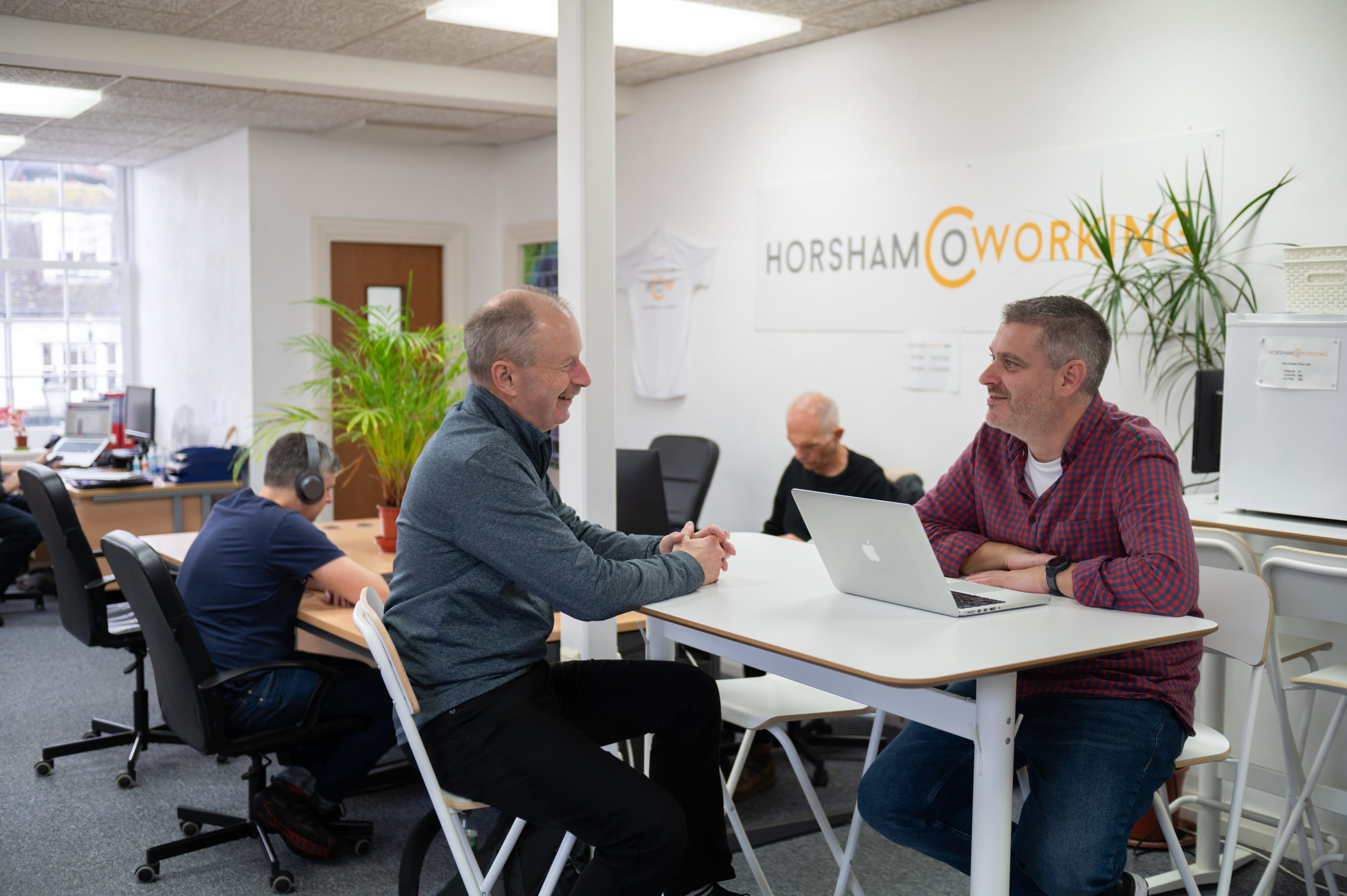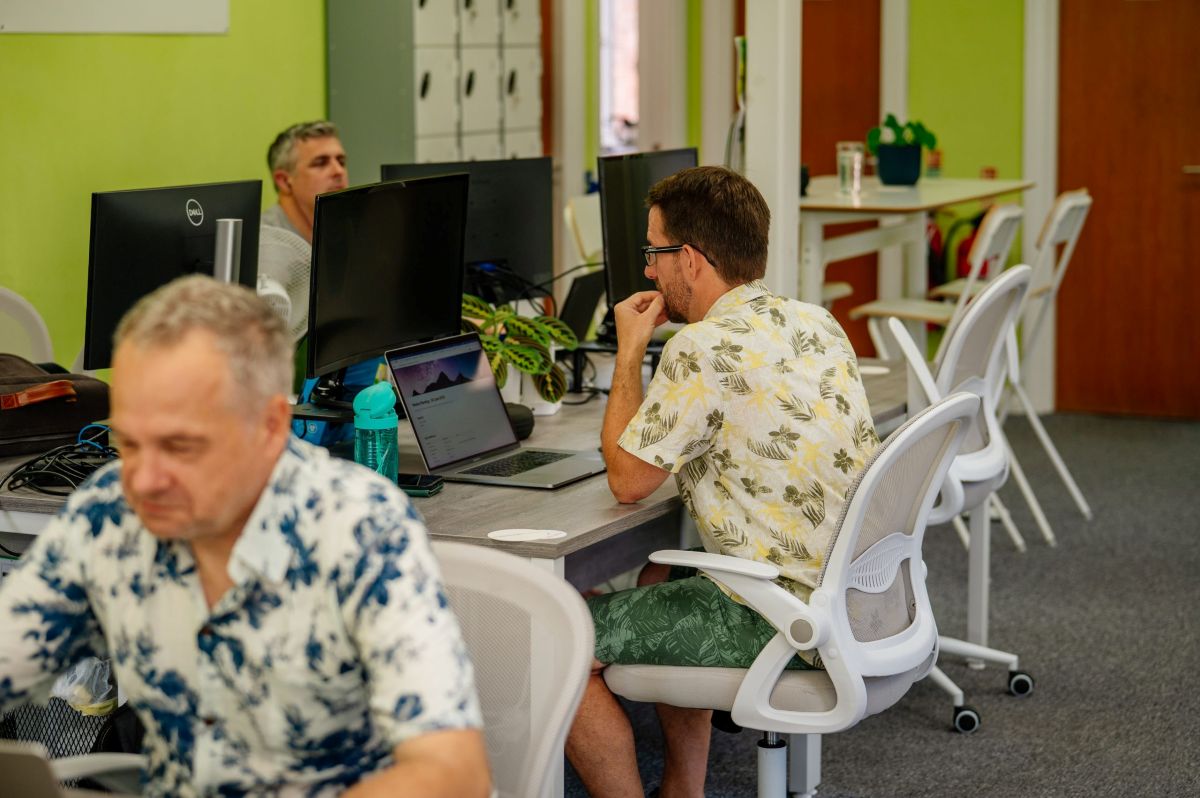
Is your home office affecting your creativity? You don’t have to give it up to get your spark back.
Remote working has become part of everyday work life for many people. For some, working from a home office offers flexibility and convenience, whilst for others it can become distracting, isolating, and less effective for creative work. Even when the tasks stay the same, the environment you work in can strongly influence how you think and perform.
So which is better, coworking or a home office? For most people, it isn’t one or the other. Working from home is hard to beat for convenience and cost, while coworking gives you better focus, some company and a clear line between work and home. That’s why many remote workers and freelancers mix the two: home on quieter days, and a coworking desk when they need to concentrate, take calls or simply see a few friendly faces. It can be an occasional day here and there, or a regular routine.
Here, we compare working from home vs coworking, look at when each works best, and explore how a change of workspace can help your focus and creativity.
If you’re interested in trying flexible coworking, get in touch with us at Horsham Coworking. We’re a welcoming and affordable professional office space with a great location in the town centre. Book a hot desk with us or explore our membership plans.
Comparing coworking vs home office spaces
When people say they’re not feeling creative, it’s often not a lack of ideas but a lack of the right conditions. Things like distractions, feeling isolated, and blurred boundaries can make creative work harder than it needs to be.
| Consideration | Coworking Space | Home Office |
| Headspace | A clear work setting helps you get into work mode faster | You’re still at home, so it can be harder to switch to a work mindset |
| Distractions | Fewer everyday distractions, plus quiet zones or meeting rooms in many spaces | Household chores, deliveries, and family members |
| Feeling stuck | A change of scene often helps you reset and think more clearly | The same surroundings every day can make work feel repetitive |
| Working alongside others | A shared environment makes work feel less lonely, without forcing conversation | Can feel isolating for remote workers |
| Calls and meetings | Meeting rooms for client meetings and important discussions are typically available | Can be difficult to do professional calls in your living space |
| Practical setup | A more professional environment with reliable high-speed internet and office equipment | You often make do with what you have at home |
| Switching off | Leaving the space helps you properly separate work and home | Work can creep into your personal life |
Whilst a home office is usually built around convenience, a coworking environment is built around focus, structure, and separation. For many people, that difference is exactly what makes creative work easier, and it’s why changing your workspace can have such a noticeable impact.

When working from home works well
Working from home isn’t the problem. For lots of people, it works brilliantly. A home office tends to suit you best when:
- You’ve got admin, emails or straightforward tasks that don’t need deep thinking
- You need to fit work around deliveries, appointments or the school run
- You’d rather skip the daily commute on a busy or rainy day
- You’ve got a quiet, separate room where you can shut the door on home life
- You’re keeping a close eye on costs that week
The trouble usually starts when every day looks the same. Without a change of scene, it’s easy for focus to slip, for work to creep into the evenings, and for days to pass without speaking to anyone. That’s where mixing in a few coworking days can make a real difference.
Why changing your workspace can boost creativity
When you work in the same place every day, especially at home, your brain tends to fall into familiar patterns. Over time, that can make work feel repetitive and ideas harder to come by.
Changing your office space helps because it changes the conditions around your work. A different setting creates a mental reset, encourages better focus, and makes it easier to approach tasks with a fresh perspective.
Better focus and better ideas
One of the biggest barriers to creative work is interrupted focus. In a home office, even small distractions can break concentration – a delivery at the door, family members moving around, or household chores that are always visible. In a coworking space, focus is easier to maintain because the environment is built for it.
When you can concentrate for longer stretches, it becomes easier to think clearly, connect ideas, and work through problems properly. This is especially valuable for writing, planning, strategy, and creative tasks.
Support for different types of work
Not all work benefits from the same setup. Some tasks need quiet focus, others need space to think, and some require professional settings for meetings or collaboration. Flexible coworking works well because it adapts to how you work, rather than forcing everything into one space.
Many coworking spaces offer:
- Flexible workspaces for different work styles
- Dedicated workspace options and private offices
- Meeting rooms for client meetings and brainstorming sessions
- Quiet zones for focused tasks
With hot desking, you can drop into a professional workspace only when you need it, paying for occasional days that suit your workload.
For those who want more consistency, a membership gives you a more regular routine and a dependable base to work from, while still keeping the flexibility that remote working makes possible.
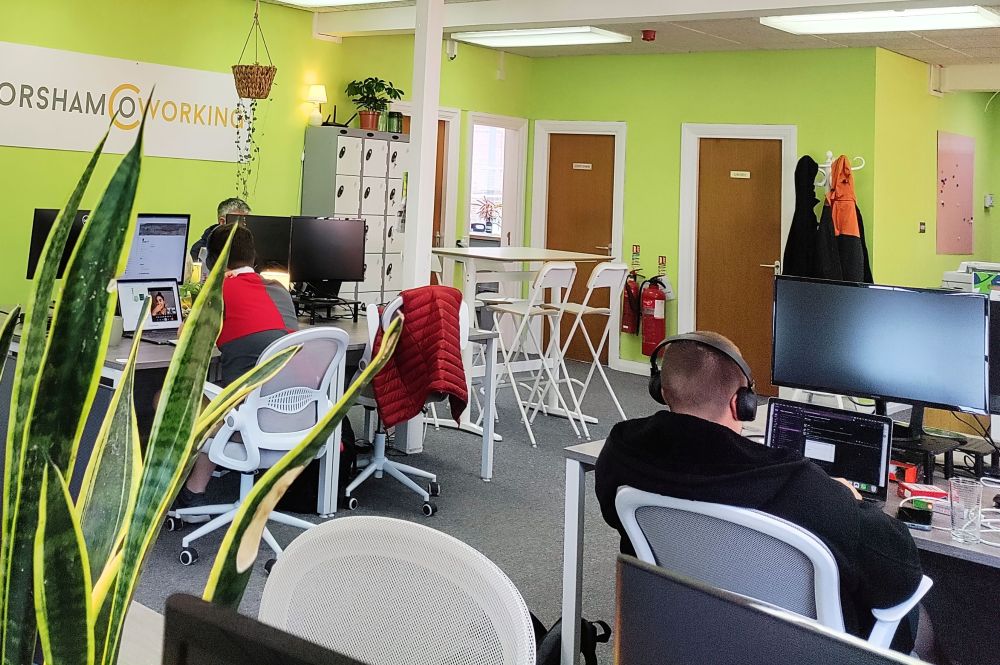
Less isolation than solely working from home
Isolation is one of the most common downsides of remote working. Spending long periods alone in a home office can affect motivation, confidence, and overall well-being, even if you enjoy working independently.
Coworking spaces reduce isolation simply by putting you around other people who are also working. There’s no pressure to seek out networking opportunities or socialise constantly, but the option to collaborate, have spontaneous conversations, or exchange ideas is there when you need it. That balance often makes work feel more motivating and less lonely.
Clearer boundaries
When your workspace is part of your living space, boundaries can easily blur. It becomes harder to fully switch into work mode, and just as hard to switch off at the end of the day.
Flexible coworking in an office environment helps restore those boundaries by providing a dedicated workspace outside the home and creating a clear start and end to the workday.
These boundaries support mental well-being and help protect your personal time. When your brain gets proper rest away from work, creative thinking during working hours becomes easier and more sustainable.

Who benefits the most from flexible coworking?
Flexible coworking works particularly well for people who enjoy the freedom of remote work but feel something is missing from a full-time home-office setup.
It’s especially valuable for:
- Remote workers who want more structure and a clearer separation between work and home
- Freelancers and self-employed professionals who need a professional environment without committing to a traditional office
- Small teams or business partners who want space to collaborate without a long-term lease
- People doing creative, planning, or strategy work who benefit from focus and fewer distractions
- Anyone feeling isolated or unmotivated while working alone at home
Summary
A home office can be convenient, but it often comes with distractions, isolation, and blurred boundaries between work and home that make creative work harder than it needs to be.
Mixing in a few days of flexible coworking offers a practical middle ground. You keep the freedom of remote working, but switch into a more professional environment. Even occasional use of a coworking space can improve job satisfaction, concentration, and overall wellbeing.
Contact Horsham Coworking for more information
Horsham Coworking offers a professional space designed for flexible working and creative focus.
We provide:
- A structured work environment close to home
- Super-fast broadband
- Bookable meeting room
- Small phone room with a desk, monitor and sofa
- Part-time and full-time membership options
- A collaborative environment with professionals from various industries
- A kitchen with free tea and coffee
- Free printing (fair use)
If this dynamic work environment sounds ideal for you, please contact us. We’d be happy to give you a tour of our setup and facilities and answer any questions you may have.
Frequently Asked Questions
For many people, yes. Coworking introduces a change of scene, access to other professionals, and a structured work environment. These factors help stimulate new ideas and break repetitive thinking patterns that can develop in a home office.
Coworking spaces provide a shared environment where remote workers can work alongside others, have casual conversations, and feel part of a community. This face-to-face interaction supports wellbeing and helps work feel less isolating without forcing constant socialising.
Absolutely. With flexible membership options, coworking allows you to choose when and how often you use the space. This helps maintain separation between work and home life while keeping control over your schedule. Spaces are designed to support flexibility without sacrificing focus or professionalism.
Most people start with a few days a month and build up to a routine that works for them. Our part-time memberships run from 4 to 16 days a month.